

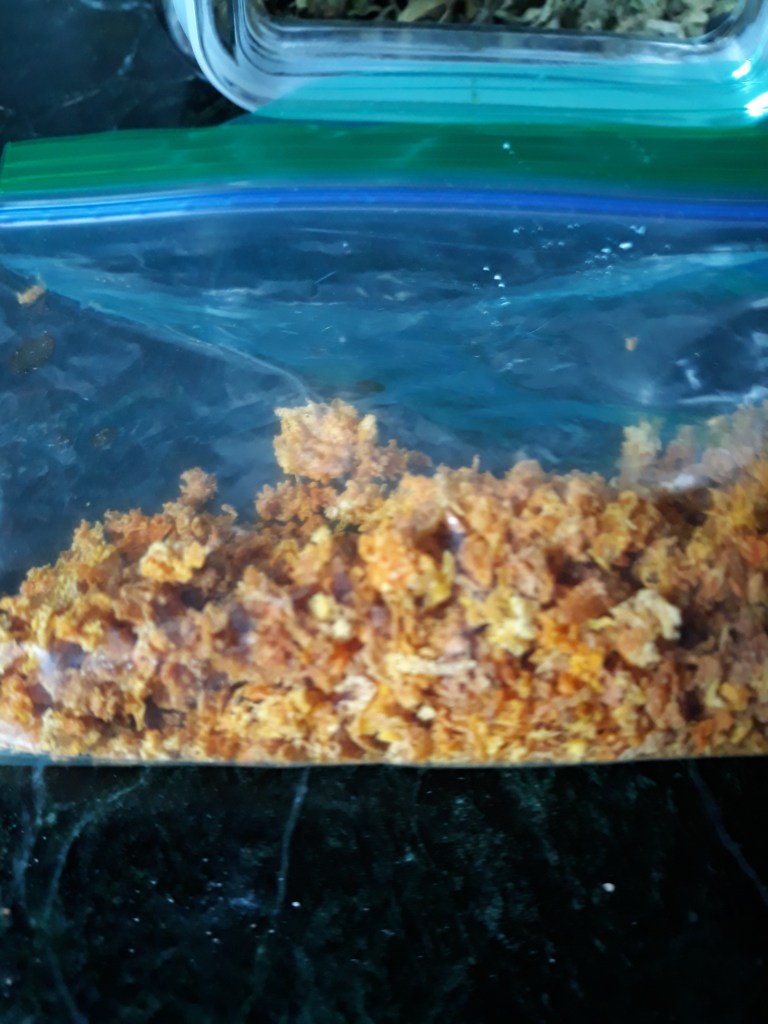
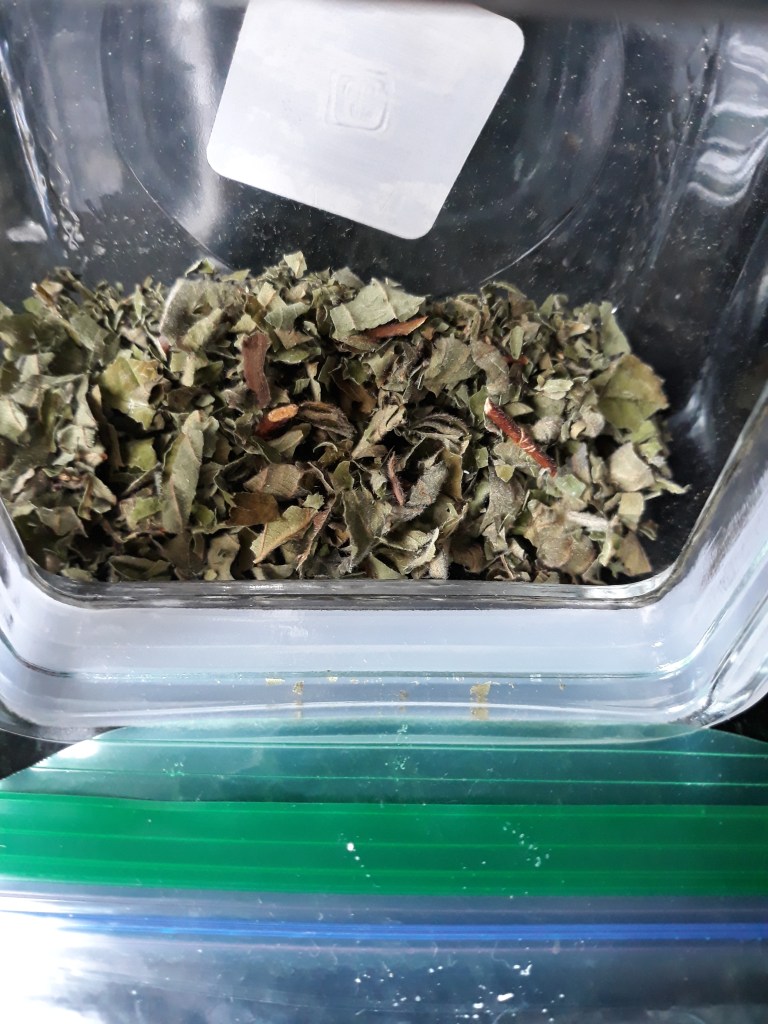
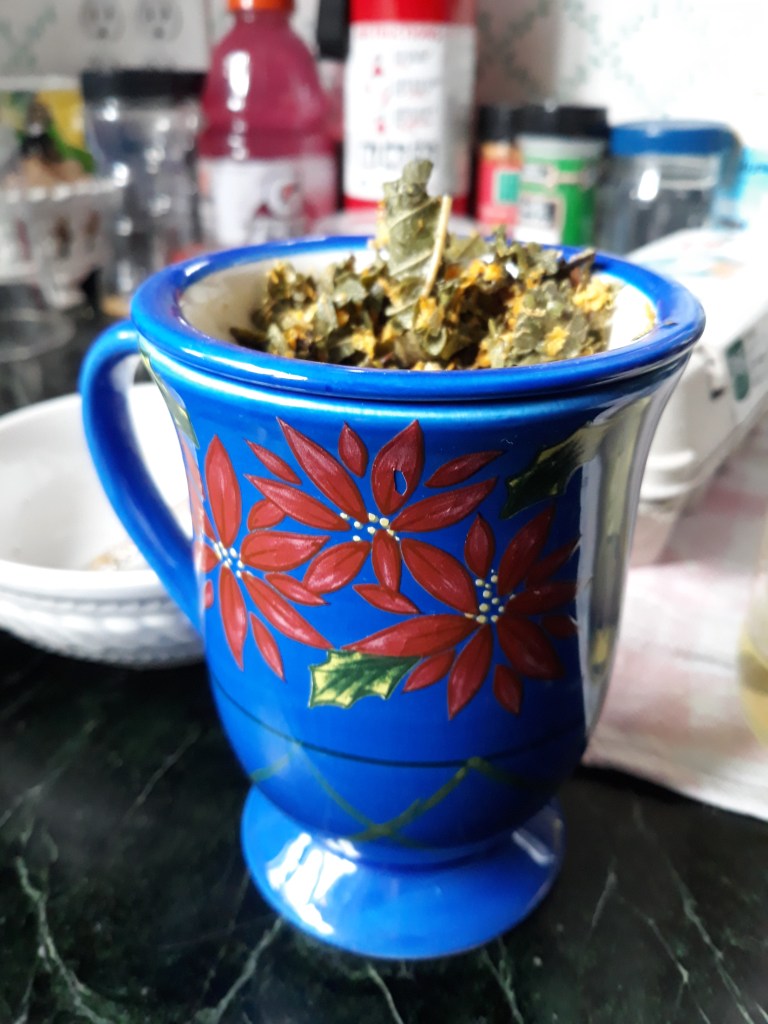
Granted, I spend WAY too much time on youtube, but after watching some videos praising homemade teas, specifically orange tea and mint tea, I decided to give it a go for myself. Doesn’t mint orange tea sound delightful?? It did to me. We raise plenty of organic mint in our garden, and we buy organic oranges (when we can find them!), so I grated the zest of a bunch of organic oranges, picked a bunch of mint, and dried it all. Made tea in the usual way, by putting a couple teaspoons of zest and dried mint in a tea strainer, made tea with great anticipation, and was mightily disappointed. I won’t drag you through my various experiments, but eventually even the large amounts of mint and orange zest shown in the pictures above didn’t make the tea as aromatic as initially hoped. I’m just guessing, but they probably do provide some health benefits when brewed? I can’t prove that, of course. I’m going to keep adding mint and orange zest to my tea along with some black tea, heavy cream and homegrown stevia, in the hope of deriving some health benefit.
Tag: Growing Food
Sweet Potato Sprouting : Do You Have To Put The Fat end Down? Maybe Not.



I watched a number of videos on how to grow sweet potatoes (Click this , for instance) and heard that you had to put the sweet potato fat end down in the water, so I decided to test this suggestion, and it looks like it might not be true. I selected two seemingly-similar sweet potatoes and put them both in jars with water covering the bottom 2 inches or so (fat end down) of the sweet potatoes, then set them on a sunny windowsill in late January of 2021. One sweet potato failed to grow any ‘slips’ (new vines) so I thought maybe it was a dud and almost composted it. Instead, I cut the dud spud in half and put both the fat end and the narrow end in their own jars, cut side down. It took weeks longer, but the cut potato parts ended up sprouting vigorously also, just like the whole potato with the fat end down. Being in zone 6B, I had plenty of time to wait (since I started this in January), so the fact that the cut potatoes took longer to create slips wasn’t a problem. It’s April 22 now and I have lots of slips, which will probably be getting planted in a couple weeks. It’s really hard to wait until Mother’s day to plant these summer crops! Some of my leftover winter crops, like kale and swiss chard, are still doing well.
I can’t conclude too much from this experiment, but it looks like a few more slips were generated from cutting the sweet potato in half and putting the halves into water than just setting the whole sweet potato in a jar of water. Both ways seem to have worked, in that slips were produced via both methods. You Choose!
Happy Leaf LED + 6 Mason Jars
Written 2/27/2020 in Saint Louis, MO USA
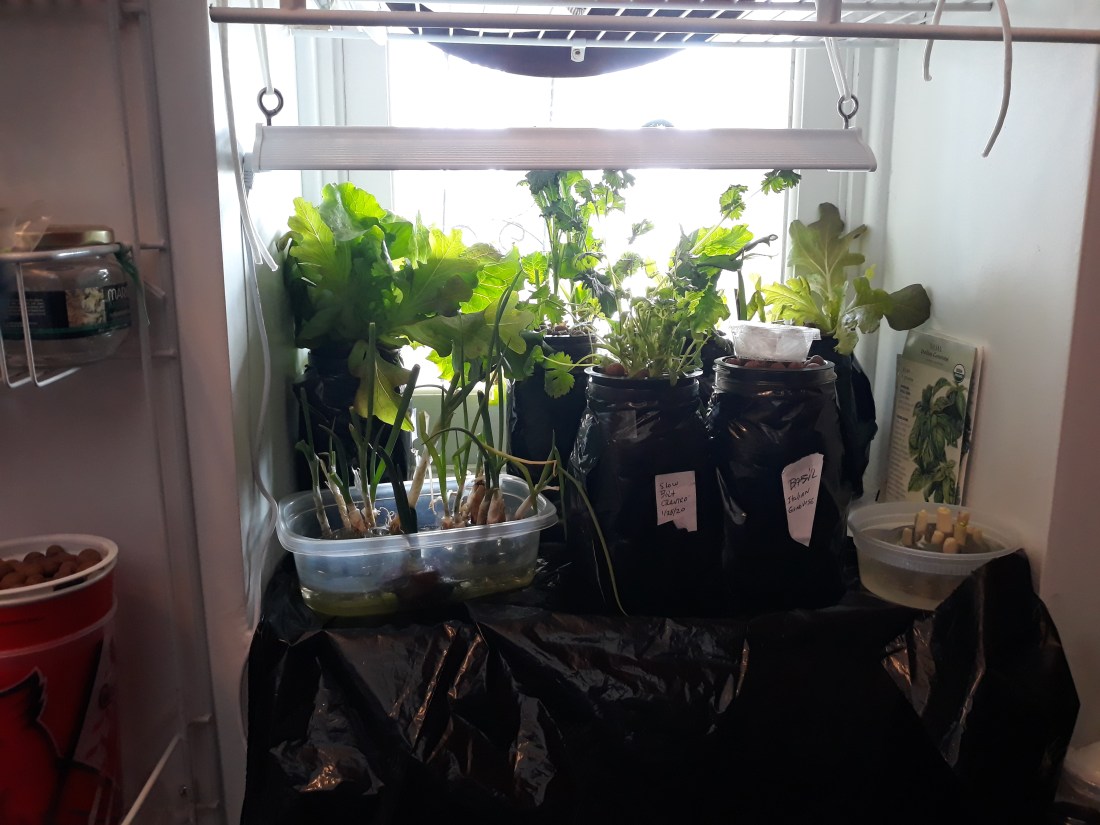
I bought a grow light from Happy Leaf LED and a small hydroponics kit (baskets and clay pebbles, a few seeds) and this is what I now have 4 weeks after setting this up (see picture). The kit from Happy Leaf LED didn’t include the fertilizer that needs to be added to water put in the jars – I bought that from Amazon for $17 USD. The sunlight from the window is probably useless; I think all the growing is due to the grow light. The light and 6 black plastic baskets to sit in the top of my mason jars, the pebbles and about 20 lettuce seeds cost about $100 on sale, and most of that cost was the made-in-America light. I think that light is about 17″ long and cost about 5 cents a day in electricity to run for 16 hours (electricity is about $0.10/kWh in the winter in Saint Louis and the Kill A Watt meter said it used .43 kWh for one 16 hour period). I put seeds of my own in 3 jars – kale, cilantro and basil. Basil barely came up at all and then died; lettuces, kale and cilantro did pretty well. The picture with this post shows the plants after I harvested enough for 2 salads, so the growth was about double what is shown. All the growth after 4 weeks is good for about enough salad for 4 people, so since we want at least twice that per week, I might need to double the number of jars per week to grow what we want on a continuing basis. And since it takes about 4 weeks to get to this point, does that mean that I’d have to have 32 mason jars, one set of jars planted each week, to have a steady supply of the salad that we want? I’ve got a lot of questions still unanswered about this process and I’m not sure how to do the financial analysis on this – do we harvest all from each jar and then have to replant, or would the cut-and-come-again capabilities of these plants mean that I’d only need half as many jars as I’m thinking? How many jars can this one light manage? How long until this system pays for itself/breaks even? How tall a space do we need to deal with these plants? Btw, the onions growing in the foreground in the picture are seated in old glass floral frogs – see my previous post about that for more information. I’ll post again when I have more data to share. Thanks for reading this!
 SolarRationalist